
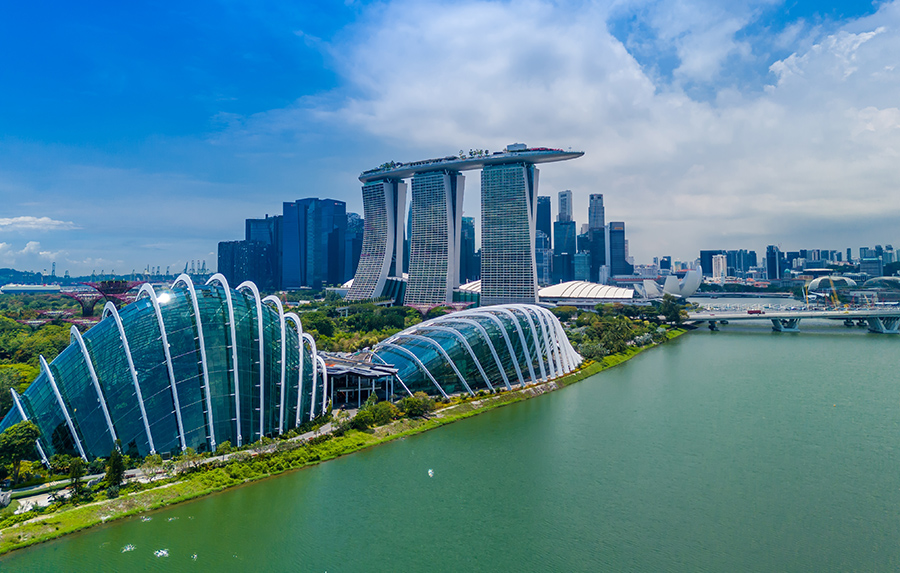
With its world-class infrastructure, stable political environment, and pro-business ecosystem, Singapore is a key springboard for companies looking to scale across Asia’s fast-growing markets. Experts from RSM share why and how Singapore stands out, and how companies can leverage the nation’s opportunities.
As global growth patterns shift, Asia has emerged as one of the most dynamic regions for business expansion. Driven by continued investment, positive demographics, and a rapidly growing digital economy, the region has become a new frontier for global businesses. Asia’s combined GDP exceeded $40 trillion in 2024, accounting for nearly half of global output, with Southeast Asia alone contributing over $4 trillion.
Singapore thrives as the region’s financial and innovation centre, excelling in advanced manufacturing, technology, and services. It acts as the strategic hub for regional trade and investment.
Singapore’s strategic location, robust legal framework, and international reputation for transparency make it the preferred hub for regional headquarters. The city-state’s appeal is about more than just geography; it provides the clarity, consistency, and credibility investors need in an otherwise fragmented landscape.
Strategic location and connectivity
Singapore’s location places it at the centre of global business, with access to over four billion people across the Asia-Pacific region. Its logistics infrastructure is world-class. The Port of Singapore connects to over 600 ports in 120 countries, while Changi Airport serves over 100 airlines with connections to 400 cities worldwide.
Its air and sea links also position Singapore as a global trading and supply-chain hub. It is the world’s top maritime hub, with more than 130,000 vessel calls annually. This round-the-clock connectivity allows businesses based here to manage production in Vietnam, sourcing in Indonesia, and sales across the region seamlessly.
Political stability and transparent governance
Singapore’s political stability, supported by decades of industrial harmony and government integrity, offers investors a secure environment. It consistently ranks among the least corrupt nations in the world, placing 3rd in Transparency International’s 2024 Corruption Perceptions Index.
The rule of law and good governance inspire deep confidence among multinational companies. Open policymaking, a robust legal system, contract enforcement, and strong investor protection mechanisms make expanding through Singapore a favoured strategy.
Financial and legal centre for regional development
Singapore’s position as a financial centre in Southeast Asia is unmatched. In 2022, it was home to:
- more than 2,000 financial institutions
- 126 offshore banks and 22 merchant banks
- $4.9 trillion in total assets under management
This makes it the largest foreign-exchange trading centre in Asia and the world’s third largest after London and New York.
For businesses, this translates to easy access to capital, banking, and high-end treasury management. Its stable legal framework – supported by the Payment Services Act, Banking Act, and Securities and Futures Act – maintains financial stability while encouraging innovation in digital payments and fintech.
Regional integration and trade network
Singapore’s extensive network of Free Trade Agreements (FTAs) enhances its role as a trading hub for Asia-Pacific markets. It has established FTAs and Double Taxation Agreements with key global economies, including Australia, China, India, Japan, and the United States. It is also part of ASEAN-wide frameworks like the ASEAN-Australia-New Zealand FTA, the ASEAN-China FTA, and the Comprehensive and Progressive Agreement for Trans-Pacific Partnership (CPTPP).
In 2024, Singapore’s total trade was valued at S$1.285 billion, with the United States, China, and Malaysia among its biggest trading partners. This high degree of integration offers Singapore-based companies’ preferential access to regional markets, with a free flow of goods, services, and capital.
Even amid shifting trade dynamics, Singapore’s diversified network and consistent policies allow it to remain a trusted base for regional operations.
The ultimate launchpad for regional expansion
These factors combine to make Singapore a natural gateway to ASEAN – a safe home base from which businesses can manage the imperatives of multiple markets while tapping into regional growth. Its resilience against global uncertainties, such as tariffs and supply chain disruptions, reinforces its role as a dependable hub for businesses seeking stability.
The nation consistently ranks among the world’s most competitive economies, underscoring its reputation as an ideal base for global firms looking eastward.
Leveraging opportunities
Doing business in Asia is rewarding, but it comes with complexities. The region’s diversity in laws, cultures, and infrastructure often creates inefficiencies for companies managing multiple local entities. It can be challenging to consolidate accounting records, abide by taxation rules, and implement uniform operating standards across jurisdictions.
By basing operations in Singapore, companies can mitigate most of these risks. A Singaporean base offers a stable centre for regional coordination where finance, compliance, and management functions can be streamlined, allowing local offices to focus on market execution. This ‘hub-and-spoke’ framework enables companies to grow cost-efficiently throughout Asia without duplicating administrative functions in every market.
Reference : Singapore: A key business hub for scaling across Asia’s fast-growing markets